
A cycling training program should provide enough structure to build fitness without becoming so demanding that you abandon it after two weeks. Begin with the number of rides you can consistently complete each week, then schedule one easy ride, one focused workout, and one longer endurance ride. Add more intensity only after this routine feels sustainable.

Key workouts for cycling training
The most useful cycling weeks are not made of random hard rides. Each ride should have a job: recover, build stamina, hold a steady pace, push your threshold, sharpen top-end fitness, or prepare your body for longer time in the saddle.
If you are new or returning after a break, keep the first priority simple: finish your rides feeling like you could train again in a day or two. If you already ride regularly, the priority shifts toward placing hard sessions where they can actually be done well.
Recovery rides to stay fresh
A recovery ride should feel almost too easy. Think 30 to 60 minutes of light spinning, flat roads if possible, and no chasing average speed. If you finish more tired than when you started, it was not a recovery ride.
This is especially useful after a long weekend ride or a hard interval day. A rider who commutes by bike may turn an easy commute into recovery, while someone with limited training time may be better off taking a full rest day instead.
Endurance rides to build stamina
Endurance rides are the base of most cycling fitness because they let you build time on the bike without creating too much fatigue. The effort should be steady enough that you can talk in full sentences and finish without feeling drained.
- Newer riders: start around 45 to 90 minutes.
- Regular riders: build toward 2 hours or more.
- Distance goals: make this your most consistent ride type.
Do not judge these rides only by speed. Wind, traffic, hills, and temperature can change the number on your computer, but a controlled endurance effort is still doing its job.
Tempo rides to hold a faster pace
Tempo work is the "comfortably hard" effort that helps you ride faster without immediately going into survival mode. It suits riders who want to sit in a quicker group, handle rolling roads better, or stop fading on steady solo rides.
A simple session is 2 x 12 to 15 minutes at tempo with easy spinning between blocks. You should need focus, but you should not be gasping or counting every second until it ends.
Threshold intervals to sustain hard efforts
Threshold intervals train the hard pace you can repeat with control, such as a long climb, a strong headwind section, or a sustained solo effort. They are productive, but they also add real fatigue.
Use them sparingly at first. A rider training four days per week might do one threshold session, such as 3 x 8 minutes or 2 x 12 minutes, then protect the next day with easy riding or rest. If every ride starts feeling heavy, threshold work is usually the first thing to reduce.
Short intervals to build top-end fitness
Short intervals are for repeated surges, punchy hills, hard starts, and improving your ability to breathe and recover under pressure. They are not necessary in every beginner plan, but they can be valuable once your basic riding routine is stable.
- Starter option: 6 x 30 seconds hard, 90 seconds easy.
- Harder option: 4 to 5 x 3 minutes very hard, full recovery.
- Best timing: when you are fresh, not after a tiring long ride.
Long rides to prepare for distance
Long rides teach more than endurance. They show whether your pacing, food, drink, saddle comfort, and clothing choices still work after two, three, or more hours.
For a first 50-mile ride, many cyclists feel prepared after building long rides into the 35 to 45 mile range. For a 100-mile ride, the long ride usually becomes the main weekly priority for several months, often building toward 70 to 85 miles depending on terrain, fitness, and available time.
Use long rides to practice the small things that become big late in the ride:
- Start easier than you want to.
- Eat before you feel empty.
- Drink regularly, especially in heat.
- Keep climbs controlled.
- Notice what hurts before it becomes a problem.
Sample cycling training schedules
Your best schedule is the one that matches your real week. Three well-placed rides can beat five optimistic rides that you keep missing, and adding days only helps if you recover between them.
Keep hard days separated when possible. If life forces two rides close together, make one of them easy rather than trying to squeeze full intensity into both.
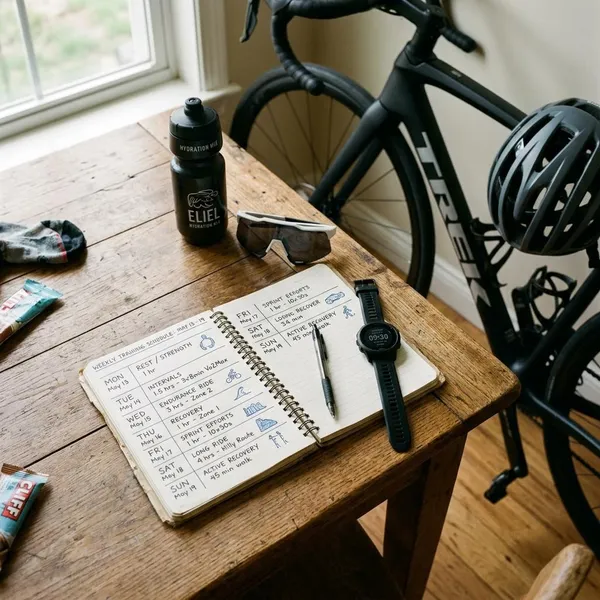
A 3-day beginner plan
This is the safest starting point if you are building consistency, coming back after time off, or unsure how your body will respond.
- Tuesday: 45 to 60 minutes easy endurance.
- Thursday: 40 to 50 minutes with 2 x 8 minutes tempo.
- Weekend: 75 to 120 minutes steady endurance.
Keep the other days for rest, walking, mobility, or normal life. If the weekend ride feels too big, shorten it and repeat the same week before progressing.
A 4-day beginner plan
A fourth ride works well once three days feel normal rather than like a major project. The extra day should usually be easy, not another hard workout.
- Monday: Rest.
- Tuesday: 45 to 60 minutes endurance.
- Thursday: Short tempo blocks.
- Saturday: 90 to 150 minutes long ride.
- Sunday: 30 to 45 minutes recovery spin.
If Sunday leaves your legs flat on Monday and Tuesday, change it to rest. More riding is not better if it ruins the key workout later in the week.
A 4-day intermediate plan
This schedule suits a rider who already has a base and wants more purposeful training without riding almost every day.
- Tuesday: Threshold intervals, such as 3 x 8 minutes.
- Thursday: Endurance ride with controlled tempo work.
- Saturday: Long endurance ride.
- Sunday: Recovery spin or short easy endurance.
The common mistake here is turning Thursday, Saturday, and Sunday into medium-hard rides. That feels productive for a week or two, then it often leads to flat legs and no real improvement.
A 5-day intermediate plan
A five-day plan can improve fitness quickly, but only if your sleep, food, and schedule support it. It is a good fit for a rider with predictable weekdays; it is a poor fit during a stressful work block or frequent travel.
- Monday: Rest.
- Tuesday: Short intervals.
- Wednesday: Recovery ride.
- Thursday: Tempo or threshold session.
- Saturday: Long endurance ride.
- Sunday: Easy to moderate endurance.
When fatigue builds, remove Wednesday or Sunday first. Protect the quality days and the long ride instead of dragging yourself through five tired sessions.
How to progress and adjust your cycling plan
A plan should change because your body gives you information, not because you feel impatient. The order matters: track what you are doing, repeat it consistently, add only one new stress at a time, then back off when fatigue stops being normal training tiredness.

Track ride time and effort
You do not need expensive equipment to train well, but you do need a basic record. Track ride duration, route or workout type, and how hard it felt on a 1 to 10 effort scale.
- Easy ride feels like: 2 to 4 out of 10.
- Tempo feels like: 6 to 7 out of 10.
- Threshold feels like: 8 out of 10, hard but repeatable.
- Too hard too often feels like: tired before you even start.
Add short notes about sleep, stress, heat, or fueling when they matter. Those notes explain more "bad rides" than most people expect.
Build consistency before adding more
Before increasing training, ask one question: did you complete the current plan for three to four weeks without feeling wrecked? If not, stay where you are.
A busy parent, shift worker, or rider with only three predictable training windows may progress better by repeating a modest plan than by copying a five-day schedule. Consistency is not glamorous, but it gives your body a clear signal often enough to adapt.
Increase distance or intensity gradually
Change one thing at a time. Add 15 to 30 minutes to the long ride, or add one interval to a workout, or add a fourth ride to the week. Do not do all three at once.
A lighter week every third or fourth week is often enough to keep progress moving. That can mean shorter rides, fewer intervals, or replacing a hard session with easy endurance.
Compare progress on familiar routes
A familiar route is one of the easiest ways to see whether training is working. Pick a loop, climb, or indoor trainer session you can repeat in similar conditions, then compare effort as much as speed.
If the same route feels easier, your heart rate is lower at a familiar pace, or you can hold a steady effort without fading late, the plan is probably helping. One windy or hot day does not prove much; the trend over several weeks matters more.
Reduce training when fatigue builds
Back off when fatigue changes from normal tired legs into a pattern. Warning signs include poor sleep, low motivation, unusually heavy legs after warming up, irritability, or workouts that feel much harder than usual.
The practical fix is simple: remove intensity first, then reduce volume if needed. Take a full rest day if easy riding still feels like work. A two-day reset is usually cheaper than forcing a bad week and losing momentum for much longer.

Conclusion
The right plan is not the hardest one on paper; it is the one that lets you repeat useful rides, recover well, and make small progress without turning every week into a test. Start with the smallest schedule you can follow confidently, keep the easy rides truly easy, and add distance or intensity only when your current week feels manageable.