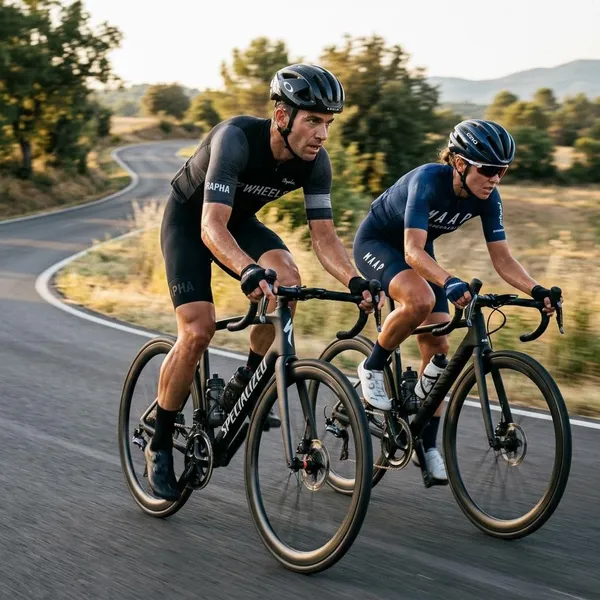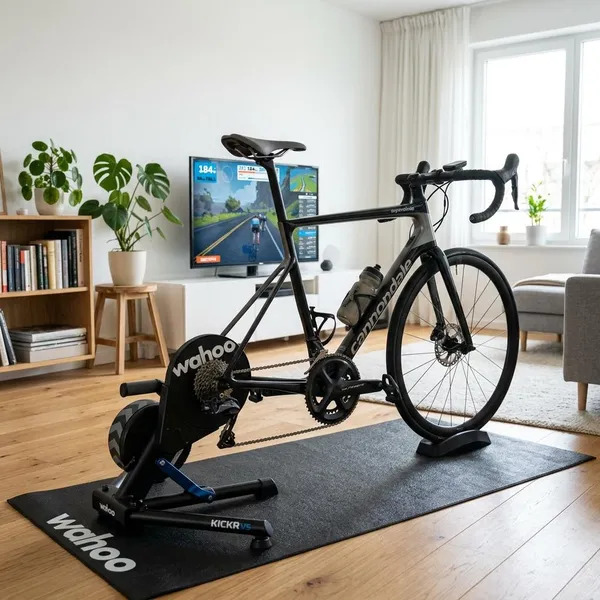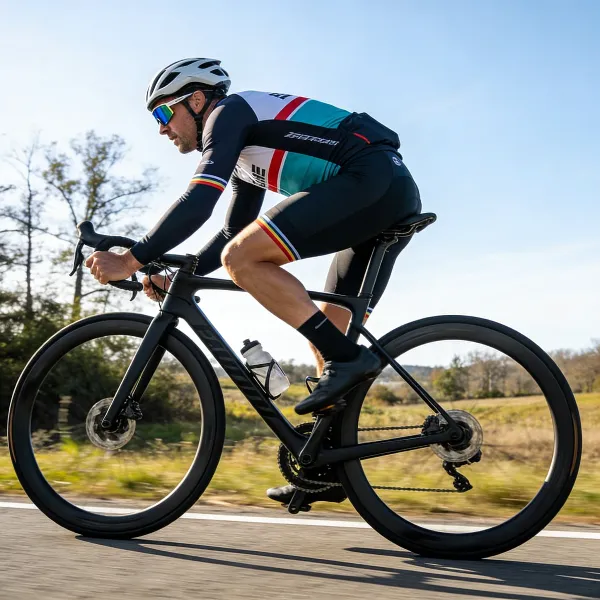
If your rides feel limited by tired legs, poor posture, or a lack of punch on climbs, strength training for cycling is worth adding. The best approach is not to copy a bodybuilder routine, but to build a small set of strong, repeatable movements that support your riding. Start with the big basics, keep recovery in mind, and adjust the gym work around your hardest bike sessions.
Why Strength Training Helps Cyclists
Cycling builds excellent endurance, but it does not train every part of the body evenly. The main value of lifting is that it fills the gaps: stronger hips, better trunk control, more force through the pedals, and better tolerance for repeated training.
More Power for Sprints and Climbs
A stronger sprint or climb usually comes from applying force well, not just spinning faster. Squats, deadlifts, split squats, and step-ups train the legs and hips to push harder against resistance, which can help when you accelerate, climb out of the saddle, or grind into a headwind.
This matters most for riders who already ride regularly but feel stuck when the road tilts up or the pace changes suddenly. If your endurance is fine but short efforts feel flat, strength work is often a better fix than adding yet another easy ride.
Better Stability on the Bike
When your hips rock, your shoulders tense up, or your lower back starts complaining late in a ride, the issue is not always the bike fit. Weakness through the core, glutes, and upper back can make it harder to hold a steady position while your legs are working.
- Less wasted movement: a stable torso gives your legs a better platform.
- Better control: useful on descents, rough roads, and gravel.
- More comfort: especially during long rides in a low position.
Stronger Muscles for Long Rides
For a century ride, fondo, or long weekend route, the problem is often not one single hard effort. It is the slow loss of form after thousands of pedal strokes. Strength training helps your muscles tolerate repeated force so your position and power do not fade as quickly.
A useful rule: if your breathing still feels controlled but your legs and posture collapse late in a ride, you probably need more muscular durability, not just more cardio.
Better Injury Resistance
The useful way to think about injury resistance is load tolerance. Lifting cannot promise injury prevention, but it can make knees, hips, back, and supporting muscles better prepared for the repetitive stress of cycling.
Prioritize the areas the bike under-trains:
- Glute strength for hip control
- Hamstring strength to balance the quads
- Core stability for posture
- Upper-back strength for long saddle time
- Single-leg control to spot left-right differences
If pain is sharp, persistent, or worsening, do not try to "strengthen through it." Reduce load and get proper advice before adding heavier lifts.
Which Muscles Matter Most for Cycling?
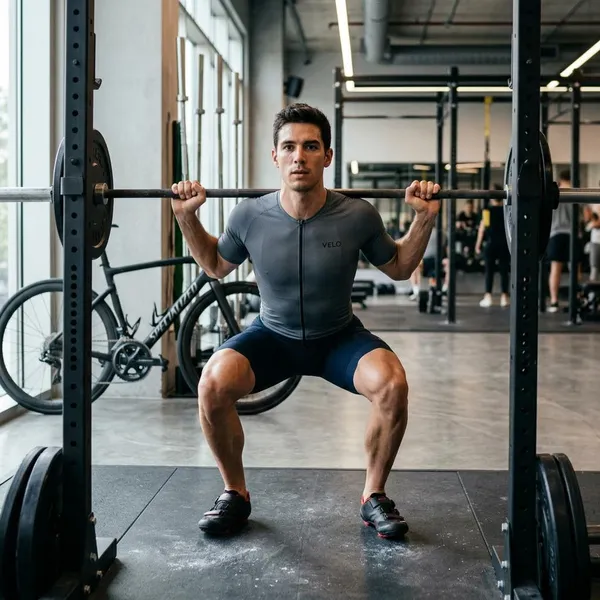
The biggest priorities are the hips, thighs, trunk, and upper body muscles that help you stay steady on the bike. You do not need to train every muscle equally; focus first on the muscles that improve force, position, and durability.
Glutes
Glutes help extend the hip and keep the pelvis stable. If they are weak or underused, cyclists often compensate with the quads and lower back, which can make hard climbing and long rides feel rougher than they need to.
Good glute-focused choices include hip thrusts, Romanian deadlifts, step-ups, and split squats. Riders who sit most of the day often benefit from these because the glutes may need extra work before they contribute well on the bike.
Quads
The quads do plenty of work during the pedal downstroke, especially on climbs, hard accelerations, and indoor trainer sessions. Strength training should make them stronger without burying them in extra fatigue.
Choose controlled compound lifts instead of endless high-rep leg extensions. If your legs are constantly sore before key rides, the gym volume is probably too high.
Hamstrings
Hamstrings support hip extension and help balance the knee against all the quad-dominant work cycling creates. They are not the star of every pedal stroke, but ignoring them is a common mistake.
Romanian deadlifts, trap bar deadlifts, and single-leg hinge work are practical options. Keep the movement controlled rather than chasing heavy weight with poor hip position.
Core
For cyclists, core training is less about crunches and more about resisting movement. You want the torso to stay quiet while the legs push hard.
- Planks: basic trunk stiffness
- Side planks: hip and side-body control
- Dead bugs: bracing without back arching
- Pallof presses: anti-rotation strength
- Farmer carries: posture under load
Upper Body
The upper body does not create much pedal power, but it helps you hold position, steer confidently, and absorb vibration. This becomes more noticeable on gravel, mountain bike trails, descents, or long road rides where your hands, neck, and shoulders fatigue before your legs are done.
A few rows, push-ups, presses, and scapular stability exercises are usually enough. Cyclists rarely need a separate bodybuilding-style upper-body day.
Best Strength Exercises for Cyclists
The best exercises give you a lot of return without making recovery impossible. A simple routine can be built around one squat pattern, one hinge pattern, one single-leg movement, one glute-focused lift, and a short core block.
Squats
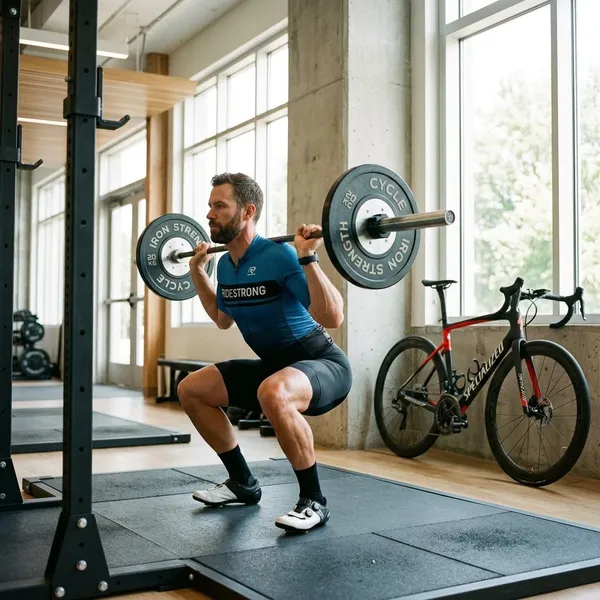
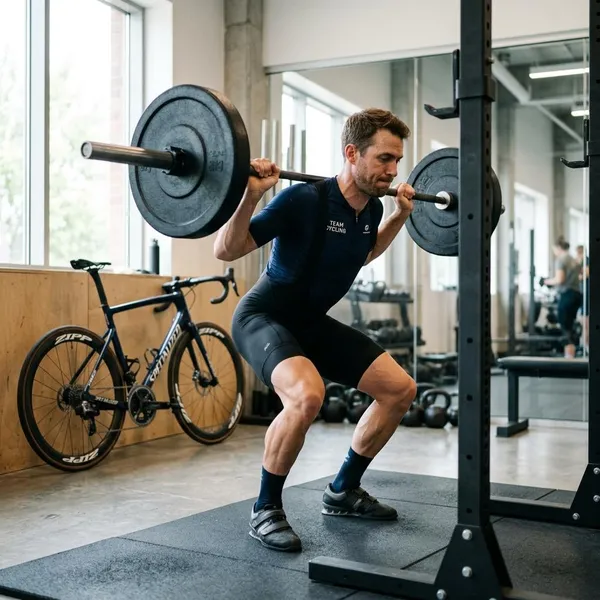
Squats train the quads, glutes, and trunk together, which makes them one of the most useful lifts for cyclists. Back squats, front squats, goblet squats, and box squats can all work if the movement is controlled.
Do not judge a squat by how much weight is on the bar first. Check whether your feet stay planted, your knees track well, and your depth is consistent. For many recreational riders, two or three good working sets are enough.
Deadlifts
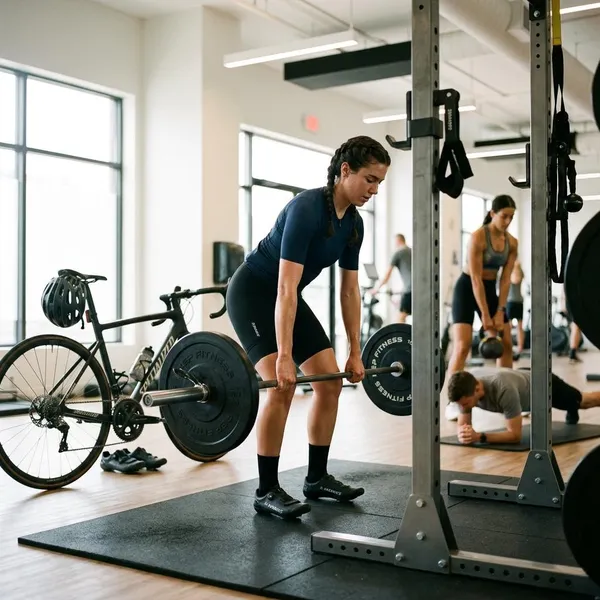
Deadlifts build the posterior chain: glutes, hamstrings, and spinal stabilizers. That is valuable because many cyclists are strong through the front of the legs but less prepared to hinge and extend powerfully from the hips.
A trap bar deadlift is often a friendly starting point because it is easier for many people to learn than a conventional barbell deadlift. Romanian deadlifts are also useful when you want hamstring and glute work with less total loading.
Split Squats
Split squats are excellent when you want strength that exposes left-right differences. They challenge the quads and glutes while forcing the hips and core to stabilize.
They are also easy to overdo. If you have a hard interval ride the next day, keep the sets lighter or use them as controlled accessory work rather than a leg-destroying main lift.
Step-Ups
Step-ups train single-leg force in a simple, practical way. Use a box height that lets you drive through the working leg without launching off the back foot.
- Keep the full foot on the box.
- Control the lowering phase.
- Use dumbbells only after the movement feels steady.
Hip Thrusts
Hip thrusts are a direct glute exercise and can be useful for cyclists who struggle to feel the glutes during squats or deadlifts. They let you train hip extension without the same overall fatigue as heavy pulling.
Pause briefly at the top, keep your ribs down, and avoid turning the lift into a lower-back arch. If you feel it mostly in your back, reduce the load and fix the position first.
Core Exercises
Core work fits best at the end of a lifting session. Pick two or three movements and perform them well instead of turning core training into a long separate workout.
A practical finisher could be side planks, dead bugs, and farmer carries. That covers bracing, hip control, and posture without adding much soreness to your legs.
How Often Should Cyclists Strength Train?
The right frequency depends on your lifting experience, riding volume, and season. The first check is simple: your strength work should support your key rides, not leave you flat for them every week.
Beginners: Twice a Week
Twice a week is enough for most beginners to learn the movements and build strength. Keep sessions around 30 to 45 minutes, use full-body workouts, and stop with a little energy left rather than testing your limits every time.
A good beginner week might be one lift after an easier ride and one lift on a separate day with no hard intervals nearby. If soreness is still affecting your pedaling after two or three days, reduce sets before adding more weight.
Off-Season: Two to Three Times a Week
The off-season is the best time to build strength more aggressively because riding intensity is usually lower. Two sessions works well for steady progress; three can work if you recover well and are not stacking hard rides on top of hard gym days.
| Rider situation | Best strength focus |
|---|---|
| New to lifting | Technique, light progression, consistent habits |
| Experienced cyclist with fewer rides | Heavier compound lifts and weakness work |
| Returning from a long season | Mobility, control, moderate loads before pushing hard |
In-Season: Once or Twice a Week
During the season, strength training becomes maintenance. One short session can be enough during race blocks or high-mileage weeks, while two sessions may work if your cycling load is moderate.
Many riders do best by keeping hard days hard: place a short lift after a demanding ride, then protect the next day for recovery. Avoid heavy lower-body lifting right before a priority race, big climb day, or important interval session unless you already know your body handles it well.
Conclusion
The smartest strength plan for a cyclist is usually small, consistent, and easy to recover from: train the hips, legs, core, and upper body with a few reliable movements, then place those sessions where they do not ruin your best rides. If you are unsure where to start, lift twice a week with controlled squats, hinges, single-leg work, and core stability, then adjust based on how your legs feel on the bike.