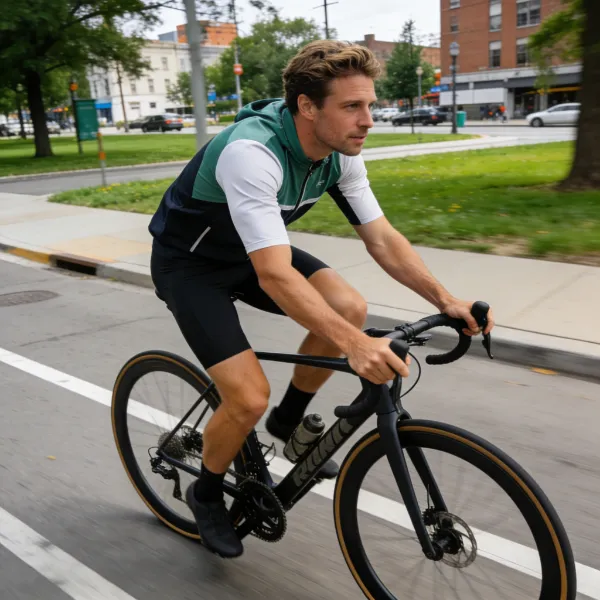
Lower back pain from cycling is usually a sign to check three things first: your bike position, how long you stay in one posture, and whether your recent rides became harder too quickly. Mild tightness that settles soon after riding is different from pain that keeps building, travels down the leg, or changes how you move. Start with small, reversible changes before blaming one single cause.
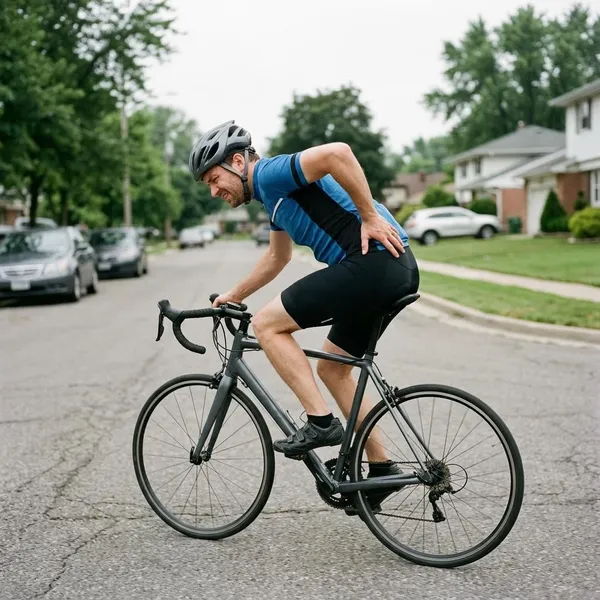
What may contribute to lower back pain while cycling?
Back discomfort on the bike often comes from a combination of fit, posture, fatigue, and training load. The most useful first step is to notice when the pain appears: immediately, after a predictable time, only indoors, only on climbs, or after a recent increase in riding.
A bike setup that does not fit you
A setup that asks too much from your hips, hamstrings, or trunk can make the lower back do extra work. A saddle that is too high may cause hip rocking, while a reach that is too long can leave you stretched and tense through the lumbar area.
This often shows up after a bike change, a new saddle, or moving from a relaxed hybrid bike to a more aggressive road position. The bike may not be "wrong," but it may be wrong for your current flexibility, strength, or ride length.
Long periods in one riding position
Even a decent fit can become uncomfortable if you sit in the same angle for too long. Long flat routes, indoor trainer sessions, and steady endurance rides can all reduce the small posture changes that normally give your back a break.
Fatigue during longer or harder rides
Fatigue changes posture before many riders notice it. As your legs tire, you may start bracing on the bars, dropping through the waist, or losing control of your pelvis. A position that feels fine for 30 minutes may feel completely different after 90 minutes or during a hard climb.
Sudden increases in training load
A quick jump in ride time or intensity can irritate tissues that were coping well at a lower dose. Common triggers include:
- Adding a long weekend ride after a quiet period
- Starting intervals or hill work too soon
- Moving indoors and riding longer without breaks
- Riding several days in a row while symptoms are building
If pain started soon after a change like this, treat the workload as part of the problem, not just the bike.
An existing back condition
Cycling may expose a back issue that was already there. Some riders feel better in a forward-leaning position, while others are aggravated by sustained flexion, vibration, or pressure through the hips.
If you already have recurring back pain in daily life, use a lower-risk approach: shorter rides, easier gears, more posture changes, and medical guidance if symptoms are persistent or unusual.
Bike fit checks for lower back discomfort
Bike fit does not need to be guessed at random. Check the parts that most directly affect pelvic control and how much your back has to stretch to reach the bars.
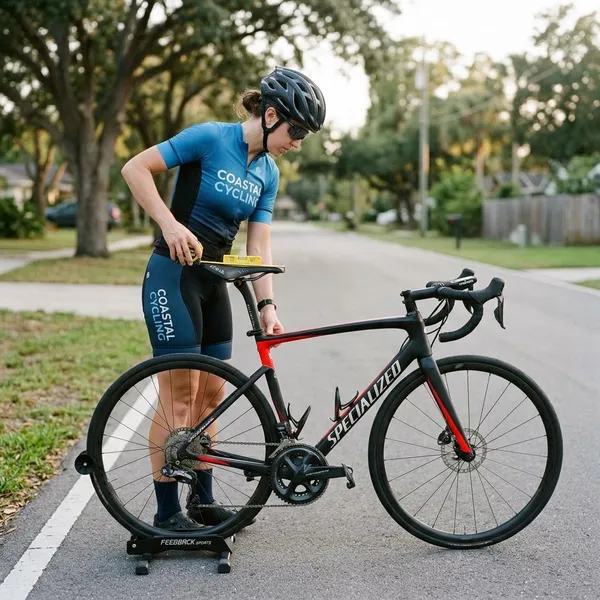
Saddle height and hip rocking
Ride easily and pay attention to your hips. If they rock side to side at the bottom of the pedal stroke, the saddle may be too high or your position may be making you reach for the pedals.
- Possible too high: hip rocking, toe pointing, feeling stretched at the bottom
- Possible too low: cramped hips, heavy knees, rounded lower back
- Useful check: film from behind on a trainer or ask someone to watch your hips
Saddle position and tilt
Fore-aft position changes how your weight is shared between saddle, pedals, and hands. Too far back can stretch you toward the bars; too far forward can make you brace with your arms and trunk.
Tilt should usually stay close to level unless there is a clear reason to adjust it. A nose-up saddle can restrict the pelvis, while too much nose-down tilt may make you slide forward and tighten your back to hold yourself in place.
Handlebar reach and drop
Reach and drop are worth checking if your back feels better only when you sit up. A lower, longer cockpit can work for flexible and conditioned riders, but it can punish someone who is new to road cycling, returning after a break, or spending longer hours on the bike.
- Hands feel overloaded or numb
- You slide forward to reach the bars
- Your elbows lock instead of staying soft
- Neck discomfort appears with lower back tightness
- You cannot hinge from the hips without slumping
Riding changes that may ease back discomfort
Before buying parts or making big adjustments, change the riding dose. The goal is to stay active without repeatedly crossing the point where your back flares up.
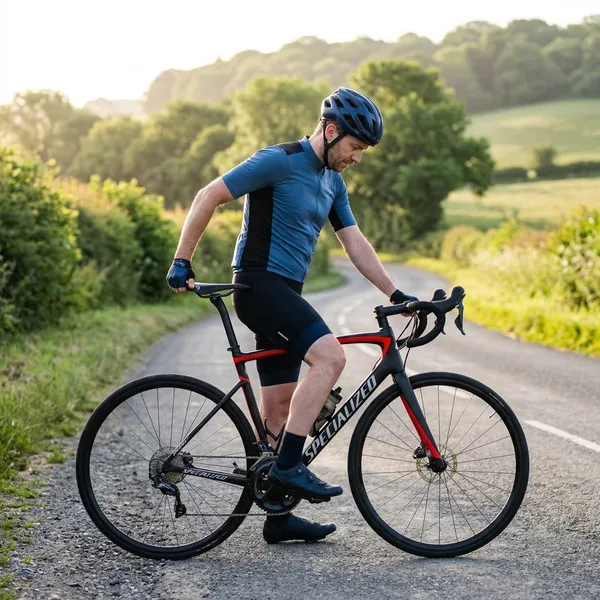
Shorten rides that trigger pain
If discomfort usually starts around the same time, stop before that point for a while. For example, if your back tightens after 75 minutes, riding 45 to 60 minutes for a couple of weeks may be more useful than repeatedly finishing in pain.
Ease off hard efforts
Climbs, sprints, and heavy gears increase force through the hips and trunk. If pain appears during hard work but not easy spinning, reduce intensity first and keep cadence comfortable.
This is especially relevant for riders who feel fine on casual rides but struggle during group rides or structured intervals. The problem may be less about "cycling" in general and more about the effort level your back is being asked to support.
Vary your position when safe
Small resets help: change hand position, stand for a few pedal strokes, relax your shoulders, and return to a hip hinge instead of slumping through the waist. Do this before discomfort becomes obvious, not only after your back is already tight.
Take breaks before discomfort builds
A short break can be enough to interrupt a flare-up pattern. On a long recreational ride, that might mean stepping off the bike for a minute; on an indoor trainer, it may mean scheduling brief posture breaks instead of riding continuously.
Rebuild ride time gradually
Increase one thing at a time. Duration usually comes before intensity, and only if symptoms stay mild and settle quickly afterward.
- Good sign: mild tightness fades soon after the ride
- Warning sign: pain worsens ride by ride
- Better choice: repeat a comfortable ride before adding more time
When to seek help with cycling back pain
Self-adjustment is reasonable for mild, short-lived discomfort. It is not the right approach when symptoms persist, spread, or interfere with normal life off the bike.
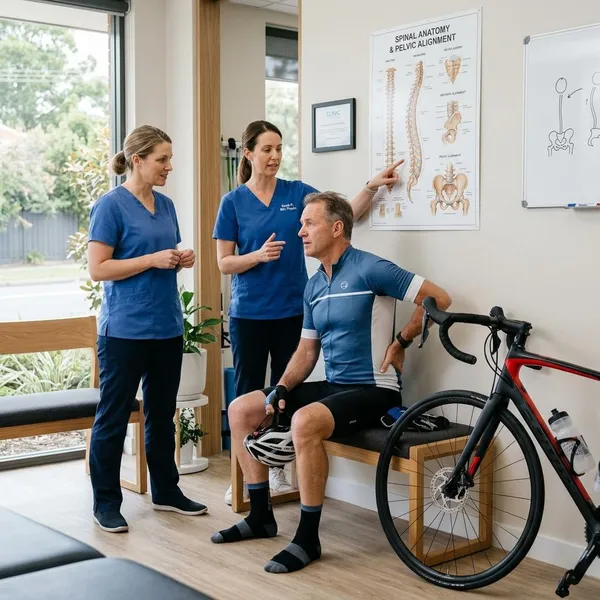
See a clinician for ongoing symptoms
Get medical advice if pain does not improve with easier riding, rest, and sensible fit checks. Seek help sooner if pain travels down the leg, causes numbness, affects strength, follows a crash, or comes with symptoms such as bowel or bladder changes, fever, or unexplained weight loss.
Consult a physical therapist for tailored exercises
A physical therapist can help when the same pain keeps returning. The useful part is not just being handed stretches; it is finding out whether your main limiter is hip mobility, trunk endurance, pelvic control, strength, or load management.
Two riders can feel pain in the same area and need different plans. One may need to build tolerance for longer rides, while another may need to stop forcing a position their hips cannot comfortably support.
Use a bike fitter to assess riding position
A bike fitter is worth considering when symptoms are strongly linked to riding position, especially after a new bike, new saddle, cleat change, or a move to indoor training. A good fit should balance comfort and performance, not simply push you into the lowest position possible.

Conclusion
Most cycling-related lower back discomfort is best approached in a practical order: reduce the ride stress, check the saddle and cockpit, then rebuild only what your back tolerates. If symptoms keep returning or feel nerve-like, do not keep experimenting endlessly on your own; the right help can save a lot of frustrating trial and error.