Running and cycling with kids works best when you start with readiness, not distance or pace. Use a jogging stroller, bike seat, trailer, tag-along, or independent riding only when your child can stay supported, follow the basic rules for that setup, and stay comfortable for the whole outing. Short, easy routes usually teach you more than one ambitious family workout.
When can kids join your runs and bike rides?
The first check is not whether your child is old enough to come along, but whether they are ready for the specific way you want to bring them. A baby in a stroller, a toddler in a trailer, and a child pedaling beside you all need different levels of strength, attention, and support.
Readiness for a jogging stroller
A jogging stroller is usually a later step than regular stroller walks. Many parents wait until their baby has strong head and neck control and meets the stroller maker's minimum age and weight guidance, often around the second half of the first year. If your baby slumps, bounces around, or cannot stay comfortably positioned, keep it to walks for now.
Start with a brisk walk on smooth pavement before trying a run. If the stroller tracks straight, your child stays settled, and the harness keeps them centered, you have a safer baseline for a short test run.
Readiness for a bike seat or trailer
A child should be able to sit upright well before riding in a bike seat or trailer, and the product must be designed for their size. A child who cannot sit steadily while wearing a helmet is not ready, even if the ride is short.
- For short local rides: a child bike seat can feel simple and compact.
- For longer paved paths: a trailer often gives more room, storage, and weather cover.
- For nervous adult riders: a trailer may feel steadier than extra weight mounted high on the bike.
Always check the seat or trailer limits before using it. Look at age, weight, harness fit, helmet clearance, and whether the setup is intended for the surfaces you plan to ride.
Readiness to run or ride alongside you
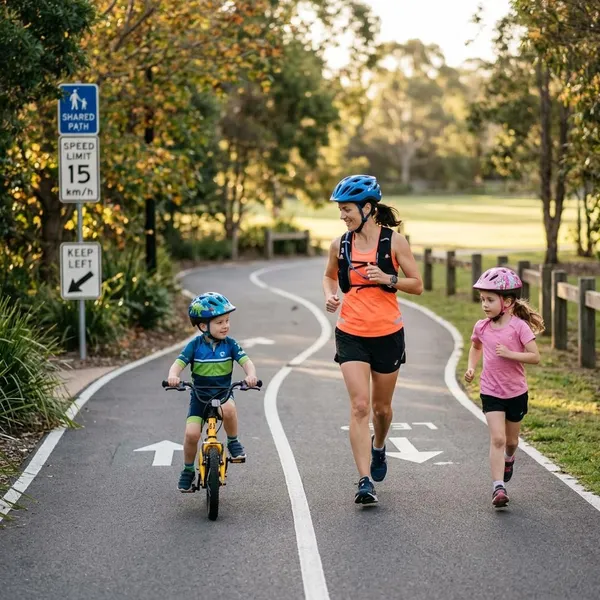
Running while your child rides, or cycling while they ride their own bike, only works when they can stop, steer, and listen without constant reminders. This is usually better for a quiet path than for streets with cars, driveways, or many crossings.
A good test is simple: can your child brake without panic, stay to one side, restart without help, and respond quickly to "stop" or "wait"? If not, keep the outing very short or use a tag-along bike until their control improves.
Choosing gear for running and cycling with kids
Good gear should make the outing calmer, not just possible. Choose based on your usual route, your child's stage, and how often you will use it. Occasional weekend park loops do not require the same setup as daily school runs or regular training miles.
Jogging strollers for family runs
A real jogging stroller is built for running speed and repeated bumps. Look for large tires, stable tracking, a secure harness, a wrist strap, and brakes that feel easy to control. A lockable or fixed front wheel is especially useful because it helps the stroller stay straight instead of wobbling at pace.
If you mostly run smooth sidewalks, comfort and easy folding may matter most. If you use park paths, rough pavement, or longer routes, stronger suspension and reliable tires become more important than saving a little weight.
Bike trailers for carrying children
Bike trailers are useful when you want more stability, storage, and weather protection. They are often a good choice for siblings, toddlers who nap on rides, or family outings where you need snacks, jackets, and small supplies.
The trade-off is space. A trailer makes your bike longer, wider, and slower on hills. Before buying one for everyday use, think about narrow gates, crowded paths, apartment storage, and whether your usual routes have tight turns or barriers.
Child bike seats for shared rides
A child bike seat can be great for short neighborhood rides because it keeps the setup compact and lets your child sit close to you. It works best for confident adult riders who are comfortable starting, stopping, and balancing with extra weight on the bike.
- Check the mount: the seat should not shift when gently tugged.
- Check the feet: foot straps should keep shoes away from wheels.
- Check the helmet space: the helmet should not force the child's head forward.
Tag-along bikes for older children
A tag-along bike suits children who want to pedal but are not ready to manage traffic, distance, or route decisions alone. It can be a useful middle step between being carried and riding independently.
Expect the adult bike to feel longer and a little less crisp when turning. Practice in an empty parking lot before using a path with other riders, especially if your child tends to lean, wiggle, or stop pedaling suddenly.
Safety checks before every run or ride
A short check before leaving prevents most avoidable problems. Do the essentials first: secure the child, check the moving parts, choose a route that matches the setup, and make sure the weather will not make the outing uncomfortable.
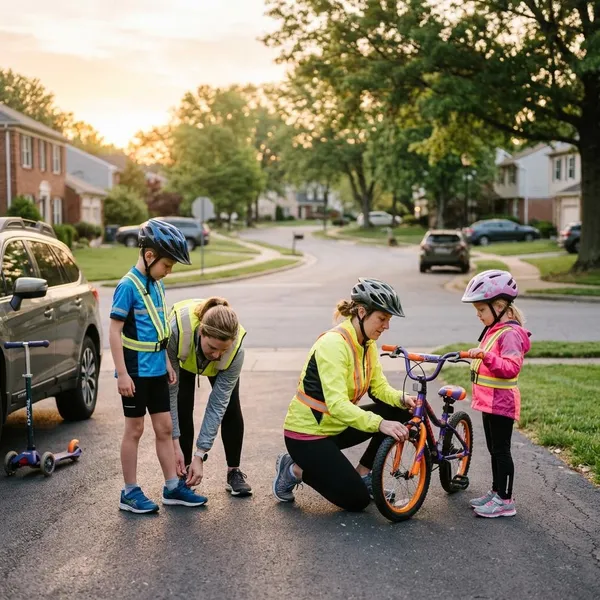
Check brakes, tires, and attachments
Before a run, test the stroller brake, wheel lock, and handle strap. Before a ride, squeeze both bike brakes, press the tires, and check the trailer hitch, child seat mount, or tag-along connection.
- Press each tire for firmness.
- Test brakes while standing still.
- Tug the stroller, seat, hitch, or trailer arm.
- Check quick-release levers and axles.
- Move bags, blankets, and toys away from wheels.
Secure harnesses and fit cycling helmets
Harnesses should hold your child centered without being loose enough for them to lean far forward or sideways. For cycling, helmet use may also depend on local rules and manufacturer guidance, so treat the helmet as part of the setup rather than an optional extra.
A quick helmet check: level on the head, straps forming a V around the ears, and the chin strap snug without pinching. Avoid thick hoods or bulky hats under the helmet because they can ruin the fit.
Choose smooth routes with little traffic
The safest family route is often not the route you would choose alone. Smooth pavement, fewer crossings, wide paths, and predictable turns matter more than speed or distance.
For a low-stress first outing, choose a short loop near home, a paved park path, or a rail trail. Long out-and-back routes are harder with kids because a tired, hungry, or cold child still has to travel all the way back.
Check weather and pack essentials
Children sitting in a stroller or trailer feel weather differently from the adult doing the work. On warm days, heat and direct sun can become the limiting factor; in cooler weather, a still child may need an extra layer even when you are sweating.
- Water
- Small snack
- Sunscreen or shade cover
- Light layer or blanket
- Phone and ID
- Basic bike repair item for rides
If it is very hot, icy, stormy, or unusually windy, shorten the plan or skip it. A missed session is easier to recover from than a miserable family outing.
How to cycle with kids
Cycling with children is not just your normal ride with extra company. The bike handles differently, the route needs more margin, and your child's attention span becomes part of the safety plan.
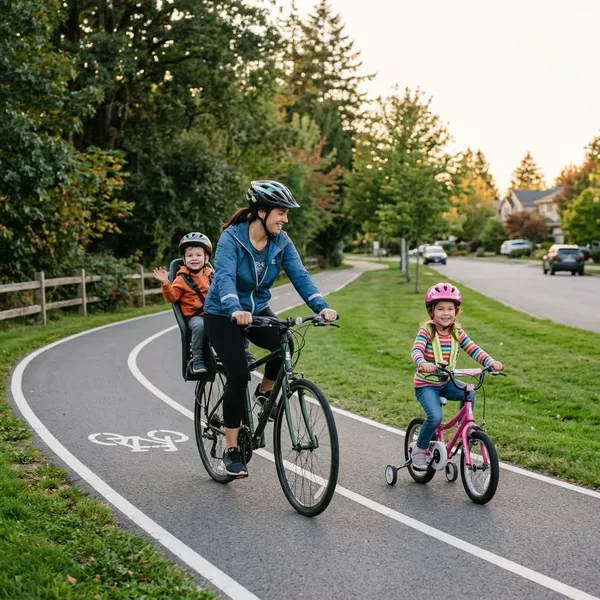
Practice handling before a longer ride
Try the setup before committing to a longer ride. An empty parking lot is enough for a first check: start, stop, turn, brake gently, and practice getting on and off without rushing.
This matters most with a child seat, trailer, or tag-along because the bike may feel heavier, wider, or slower to respond. If it feels awkward when the area is empty, it will feel worse around dogs, pedestrians, and other cyclists.
Start on quiet, traffic-free paths
A quiet path gives both you and your child time to make small mistakes safely. For the first few rides, aim for easy terrain and a short duration rather than a destination that requires everyone to keep going.
A 20-minute ride to a playground can be more successful than a one-hour ride with no natural break. If your child finishes happy, they are much more likely to want to ride again.
Agree on stopping signals with young riders
Use simple cues before you start moving. "Stop," "slow," "stay right," and "wait here" are easier for young riders than long explanations.
- Stop: brake and put a foot down.
- Slow: reduce speed but keep rolling.
- Stay right: move to the side of the path.
- Behind me: let the adult lead through a busy spot.
Practice the cues at low speed. One good ride does not mean the habit is automatic, especially when a child gets distracted by puddles, dogs, or friends.
Match the pace to the slowest rider
Family rides go better when the slowest rider sets the pace. If an adult turns every outing into training, children often rush, wobble, complain, or stop enjoying the ride.
Use family sessions for easy movement, skill practice, and time outside. Save hard intervals, tempo work, or technical riding for solo sessions when you can focus fully.
Conclusion
The best setup is the one that matches your child's current ability and your real route, not the one that lets you keep your old pace. Start with short, smooth, low-traffic outings; upgrade the distance or gear only when the basics feel easy. If everyone comes home safe, comfortable, and willing to go again, the outing did its job.